The University of Tasmania (UTAS) is demonstrating that decarbonising complex campus buildings doesn’t always mean starting from scratch. Through its Electrification Program, the University is taking a two-pronged approach: optimising existing systems to reduce energy use and emissions now, while introducing next-generation technologies to support the transition away from fossil fuels.
Two projects in Hobart demonstrate this approach in action. At the Medical Science Precinct, careful analysis and optimisation of existing heating, ventilation and air conditioning (HVAC) systems has already delivered substantial energy, emissions and financial savings. Meanwhile, at the Institute for Marine and Antarctic Studies (IMAS) Salamanca building, UTAS is delivering what it believes to be an Australian-first large-scale natural refrigerant heat pump system.
What inspired the projects?
The UTAS Electrification Program grew from the University’s Greenhouse Gas Emissions Reduction Strategic Plan 2022–2030 and its commitment to reduce emissions from natural gas and other sources.
Rather than immediately replacing existing infrastructure, the University’s approach begins by reviewing and optimising HVAC systems to understand how they are performing and identify opportunities to eliminate energy waste. From there, major assets such as chillers and boilers can be assessed for replacement, with upgraded systems then carefully tuned, maintained and monitored.
The Medical Science Precinct highlights what can be achieved by making existing infrastructure perform better, while IMAS is providing an opportunity to explore next-generation technology as part of the transition to electrification.
How do the projects align with the University’s broader sustainability goals?
Together, the projects support UTAS’ broader emissions reduction ambitions by addressing multiple sources of building emissions rather than focusing on energy consumption alone. Optimising existing systems can reduce both electricity and natural gas use, while carefully selecting replacement technology provides an opportunity to eliminate fossil fuel use and reduce the climate impact associated with refrigerants.
As UTAS Project Engineer (Electrification) Pierre Le Mestreallan explains:
“That gave us the ability to reduce electricity use, eliminate natural gas emissions and reduce refrigerant emissions in one project.”
The approach also recognises that effective decarbonisation extends beyond installation. Ongoing tuning, maintenance and performance monitoring are important to ensuring upgraded systems continue to deliver their intended environmental and operational benefits. The program also demonstrates how campus operations can support learning, with insights from student sustainability projects helping to inform the University’s approach to building emissions, energy efficiency and refrigerant management.
What are the key features and outcomes?
At the Medical Science Precinct, UTAS has demonstrated the value of first understanding and optimising what already exists.
The approximately 20,000 m² precinct comprises facilities across six-levels, supporting research laboratories, teaching spaces, lecture theatres, clinical activities and offices. As the first stage of its electrification program, UTAS reviewed the performance of the existing comfort heating and cooling systems, identifying issues common across many large buildings and tuning systems and controls to eliminate unnecessary energy use.
Over a 12-month period, this work saved approximately:
- 267,000 kWh of electricity
- 4,000 GJ of natural gas
- $200,000 in energy costs
The project also improved indoor air quality while reducing filtration energy use. The number of filters was reduced from 487 to 366, with the filtration upgrade achieving an estimated 1.2-year payback. The work also led to the development of a new performance-based methodology for filter maintenance.
At IMAS Salamanca, UTAS is applying the other side of its approach: introducing next-generation technology to overcome some of the challenges associated with electrifying existing buildings.
The approximately 8,000 m² research and office facility is being equipped with what UTAS believes is an Australian-first large-scale natural refrigerant heat pump system. Using carbon dioxide refrigerant with a Global Warming Potential (GWP) of just 1, the system will provide heating, cooling and domestic hot water with full redundancy.
Although bespoke, the system has been designed to address barriers common to building electrification, including cost, available space, electrical demand and performance, and is expected to be more cost-effective over its lifetime than a conventional heat pump solution.
What were the major challenges and successes?
Introducing technology that has not previously been delivered at this scale in Australia has required UTAS to challenge established industry approaches. “The biggest challenge was asking the market to deliver something it hadn’t done before at this scale,” Pierre says.
Most consultants initially approached did not believe the proposed IMAS system was achievable, while contractors had limited experience installing natural-refrigerant heat pumps. Refrigerant management has also been an important consideration, reinforcing the need to look beyond operational energy use and consider the long-term environmental profile of the systems being installed.
“In addition, despite Australia’s regulations, it can still be difficult to clearly track refrigerant from recovery through to final disposal. This reinforces the importance of designing systems with a better long-term environmental profile.”
Overcoming these challenges has required an evidence-based approach and, importantly, a capable team prepared to pursue a different solution. At the same time, the results at the Medical Science Precinct demonstrate the value of looking closely at existing systems before replacing them. Significant energy and cost savings have already been achieved through optimisation, while the IMAS project is creating an opportunity to test an innovative approach to electrification at scale.
What advice would you give to other institutions?
UTAS’ experience highlights that there is no single pathway to decarbonising existing buildings. Institutions can achieve meaningful gains by improving existing infrastructure while carefully planning for the technologies that will ultimately replace fossil-fuel systems.
For Pierre, developing the specific knowledge needed to understand and overcome the barriers associated with building electrification was an important part of shaping the program. This included investigating technology readiness, cost and return on investment, natural refrigerant options, industry capability and the broader sustainability benefits of electrification.
Student collaboration has also helped shape the program. Through the UTAS Sustainability Integration Program for Students (SIPS), Pierre mentored and supervised students working on six sustainability projects exploring areas including building emissions, energy efficiency and future refrigerant trends.
“I was fortunate to be involved in the UTAS Sustainability Integration Program for Students (SIPS), mentoring and supervising students on sustainability projects. I learned a lot through these projects, and that experience has really helped shape the current Electrification Program.”
Key lessons include:
- Build your knowledge first by understanding electrification technologies, refrigerants, regulations and industry capability to establish a clear vision.
- Optimise before replacing. Existing systems may offer substantial opportunities to reduce energy use, emissions and costs before major capital investment is required.
- Emerging technologies may require new thinking across design, procurement, installation and commissioning so be prepared to challenge conventional approaches.
- A capable team that shares the vision and is prepared to try something different is essential when delivering innovative projects.
- Connect operations with learning. UTAS did this through six student projects (delivered through the UTAS Sustainability Integration Program for Students – SIPS), which have contributed to understanding building emissions, energy efficiency and future refrigerant trends.
Looking ahead:
With substantial savings already being realised at the Medical Science Precinct and the IMAS natural refrigerant heat pump project targeted for completion in December 2026, UTAS is developing valuable experience across both optimisation and next-generation building technology.
Together, the projects demonstrate that building decarbonisation is not simply about replacing existing equipment with electric alternatives. By making existing infrastructure work better while introducing innovative technology where transformation is required, UTAS is developing a considered pathway towards lower-carbon buildings and generating practical lessons that can help other institutions facing similar challenges.
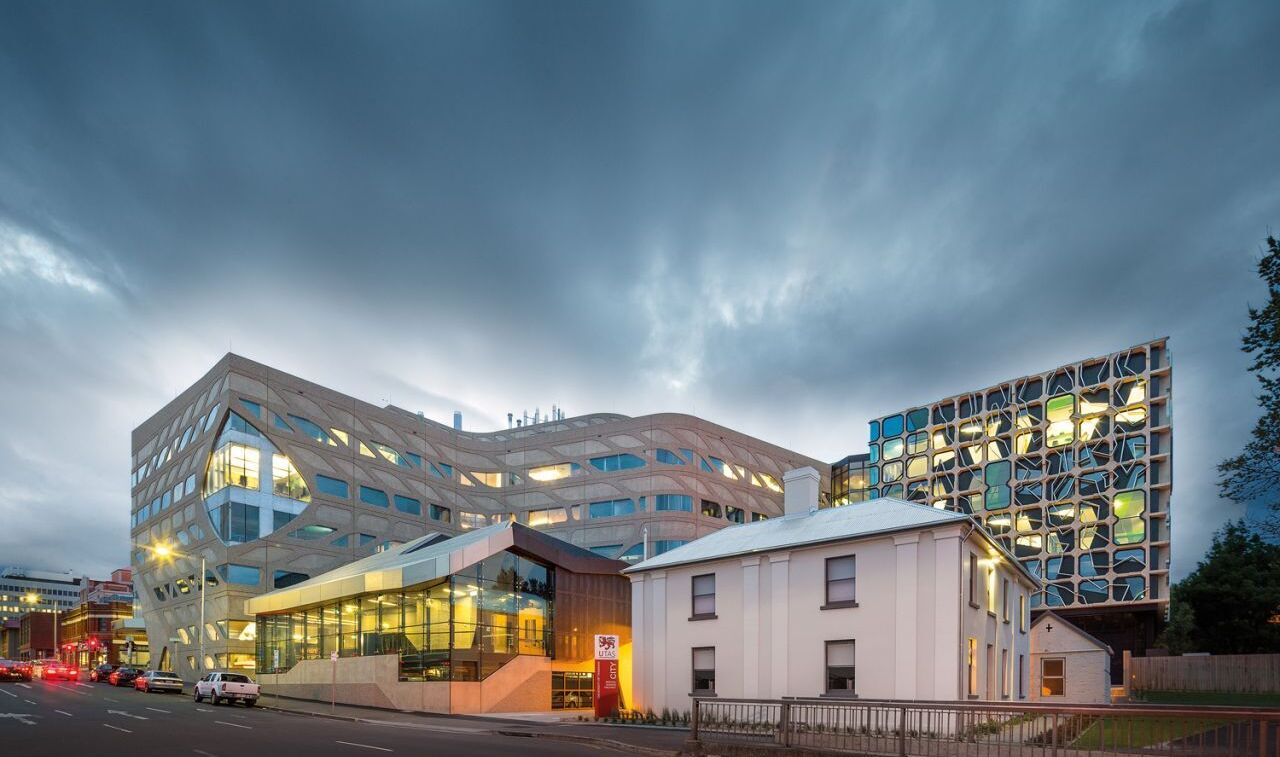
University of Tasmania Medical Science Precinct, Hobart CBD campus
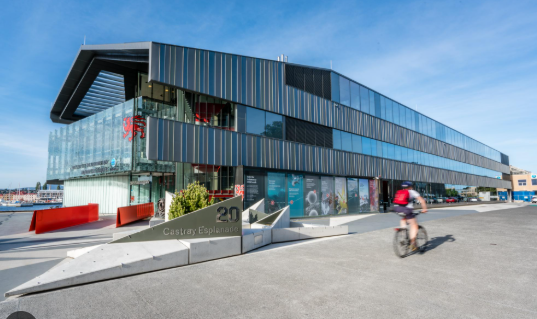
University of Tasmania Institute for Marine and Antarctic Studies (IMAS) Salamanca building

Explore more
Read more examples of sustainability leadership from ACTS members and learn how institutions across the sector are turning commitment into action.